Managed Operational Intelligence

Operational Intelligence,
managed for you.

Control is knowing what's happening accurately, in time to act. Operational Intelligence brings actionable insights to the right people, in real time. We manage that OI for you, end to end.

What is OI?

The Reality

The reporting cycle is too slow
for how the business actually runs.

Most mid-sized operations still run on a monthly or quarterly reporting rhythm — gather from disparate sources, reconcile by hand, compile the picture. By the time it is complete, the events that mattered have already passed. The signals were there; the report was not.

01

Sales, production, and finance each work from a different picture.

Every department keeps its own version — a CRM number, a shop-floor whiteboard, a spreadsheet finance doesn’t trust. Nobody reconciles them until someone has time, which is usually too late to matter.
02

Nothing is watching until someone has time to look.

An at-risk order, a worn blade, a stalled job, a slipping margin — none of it is evaluated as it happens. It surfaces in the Monday meeting, when the customer calls, or when the machine stops — not before.

03

Even when the data is right, it doesn’t reach the person who can act on it.

A number sits in a report or a dashboard nobody opens between meetings. By the time it’s compiled into something a person can read and act on, the window has narrowed — or closed.

04

Knowing isn’t enough — someone still has to do the manual work of fixing it.

Compiling the update, chasing the status, re-typing the same details into three systems — the fix depends on a person finding the time, so it waits behind everything else on their desk.

05

Consequential moves wait for whoever is free enough to make them.

A customer update, a schedule change, a reorder — each one sits until someone with the authority and the time gets to it, with no record of what almost slipped through.

06

There’s no baseline, so nobody can tell if it’s actually getting better.

Quoting draws on instinct; actual job cost rarely feeds back into the next estimate. Downtime and OTIF get discussed anecdotally — never against a number anyone agreed to before.

When the picture arrives late, action arrives late

QuickBooks, spreadsheets, shop-floor logs, carrier emails — scattered and silent until someone has time to compile them. The Monday report still describes Wednesday. That lag is where margin, OTIF, and management hours are lost — and where operational excellence never gets a fair start.

What Operational Intelligence Delivers

Narrow the cycle.
Act while it still matters.

Operational Intelligence compresses the gap between signal and action — from a monthly compile to a live loop. One connected thread from inquiry to invoice; exceptions in hours, not at month-end; follow-through ready before the meeting. That is how control returns — and how operational excellence compounds.

What is OI? →

Inquiry

Logged once. Pricing from one price book.

Quote

Costs pre-filled. Flagged if margin is low.

Order

Created on approval. Confirmation sent.

Production

Schedule driven by order. Cut times logged.

Inventory

Updated as jobs complete. Reorder alerts fire.

Shipment

Docs generated. Customer notified on dispatch.

Invoice

Actual costs vs quote — variance feeds next estimate.

One record, one thread — the picture updates as work happens, not when someone compiles it.

Today

  • ×Month-end pack still describing last week
  • ×Monday briefing takes an hour to compile
  • ×Custom quote: 60–90 minutes
  • ×Problems surface at the Monday meeting
  • ×Customer calls to ask where their order is
  • ×No baseline to improve from

With OI

  • Exceptions surface the day they open
  • Briefing arrives before the meeting
  • Quote generated in under 15 minutes
  • Action loops close while there is still time
  • Customer gets a proactive update
  • Every KPI tracked from day one

The Solution

We run that compressed loop
as a managed service.

Zipdata closes the gap between signal and action — continuously — so your team acts in the window that still matters. We own the setup, the running, and the proof.

01Sales, production, and finance each work from a different picture

We give every department the same live record.

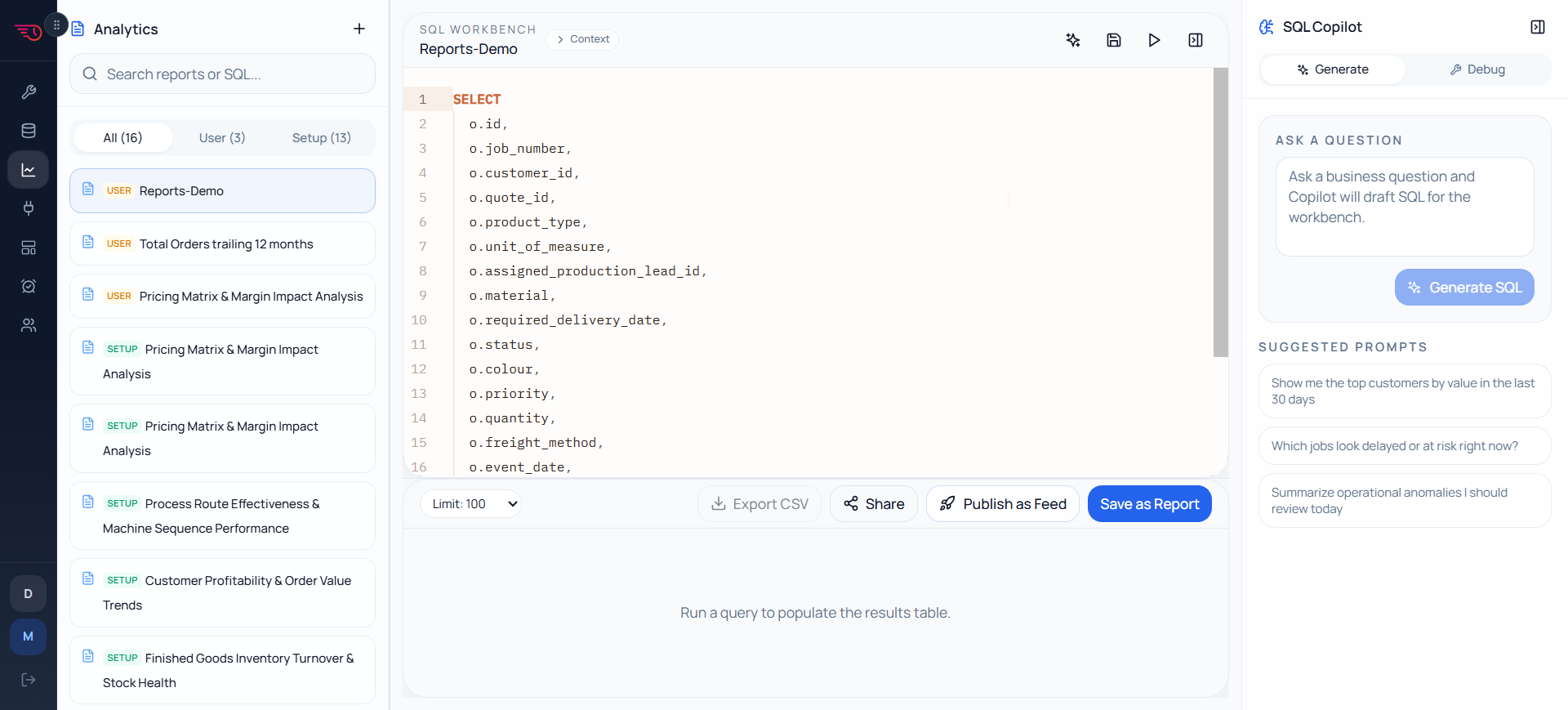
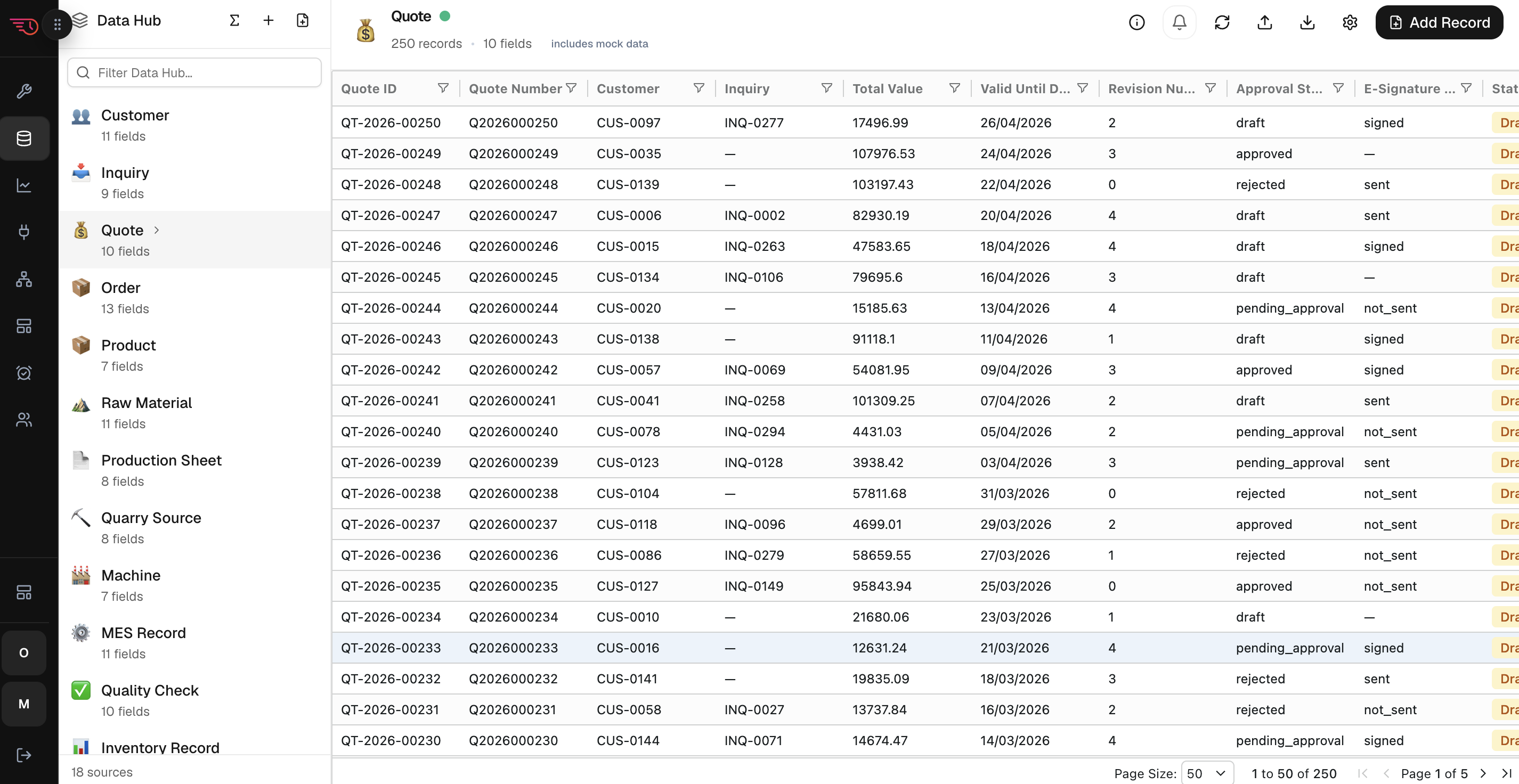
Sales, production, and finance work from one typed Data Hub — not three spreadsheets reconciled at month-end. One source of truth, updated as work happens.

Data Hub
02Nothing is watching until someone has time to look

We flag problems before they reach the Monday meeting.

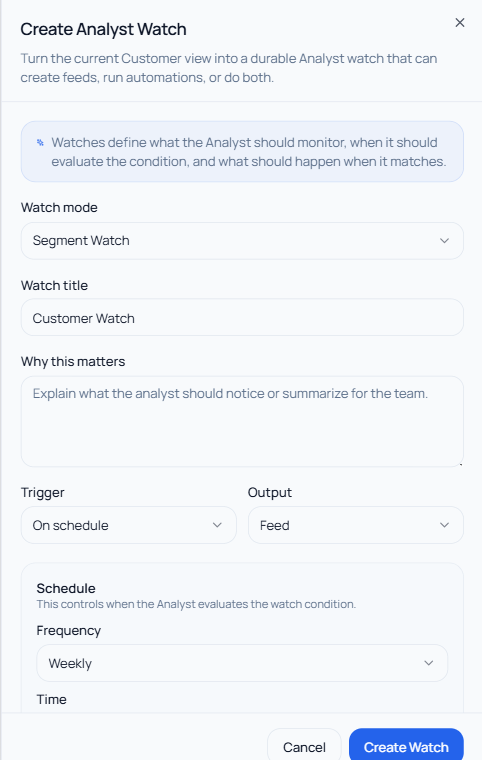
Watches run continuously against the live record. An at-risk order, a blade past its wear limit, a slipping margin — flagged with the likely cause, while there's still time to act.

WatchesAgents
03Even when the data is right, it doesn't reach the person who can act on it

We put the finished briefing in front of the right person, before they ask.

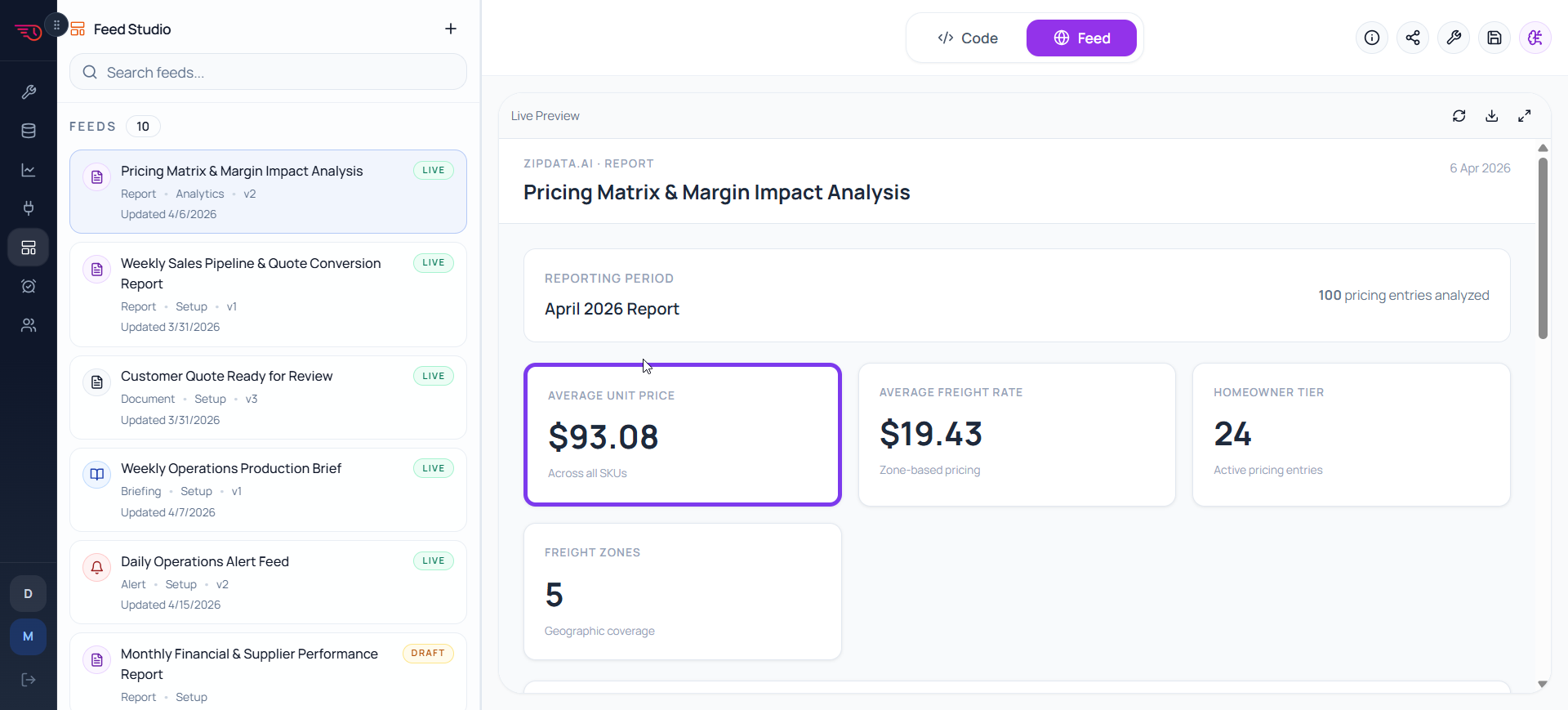
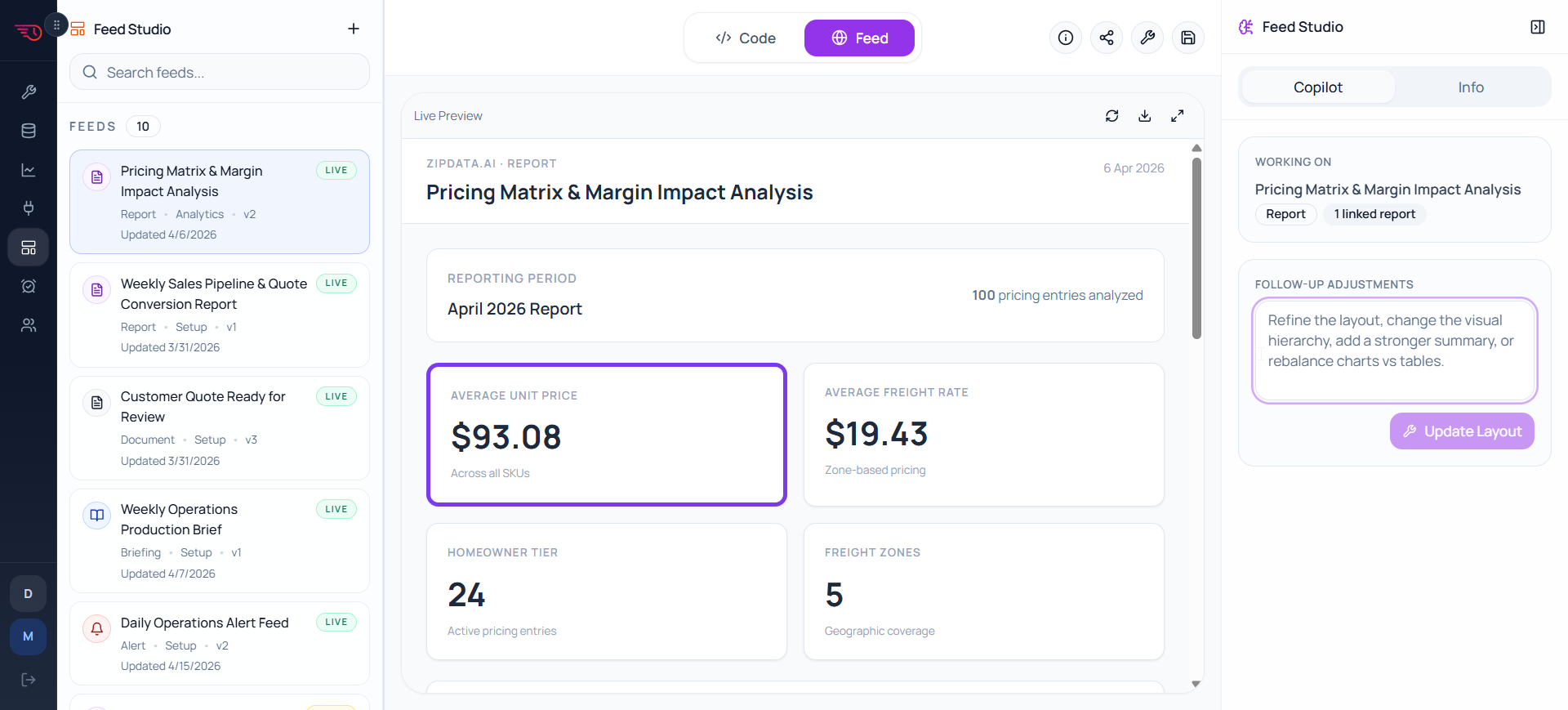
Feeds turn the flagged exception into a plain-language briefing, alert, or scorecard — shaped for whoever needs to act, delivered before the meeting starts.

Feeds
04Knowing isn't enough — someone still has to do the manual work of fixing it

We remove the manual work, so your team closes the loop, not the paperwork.

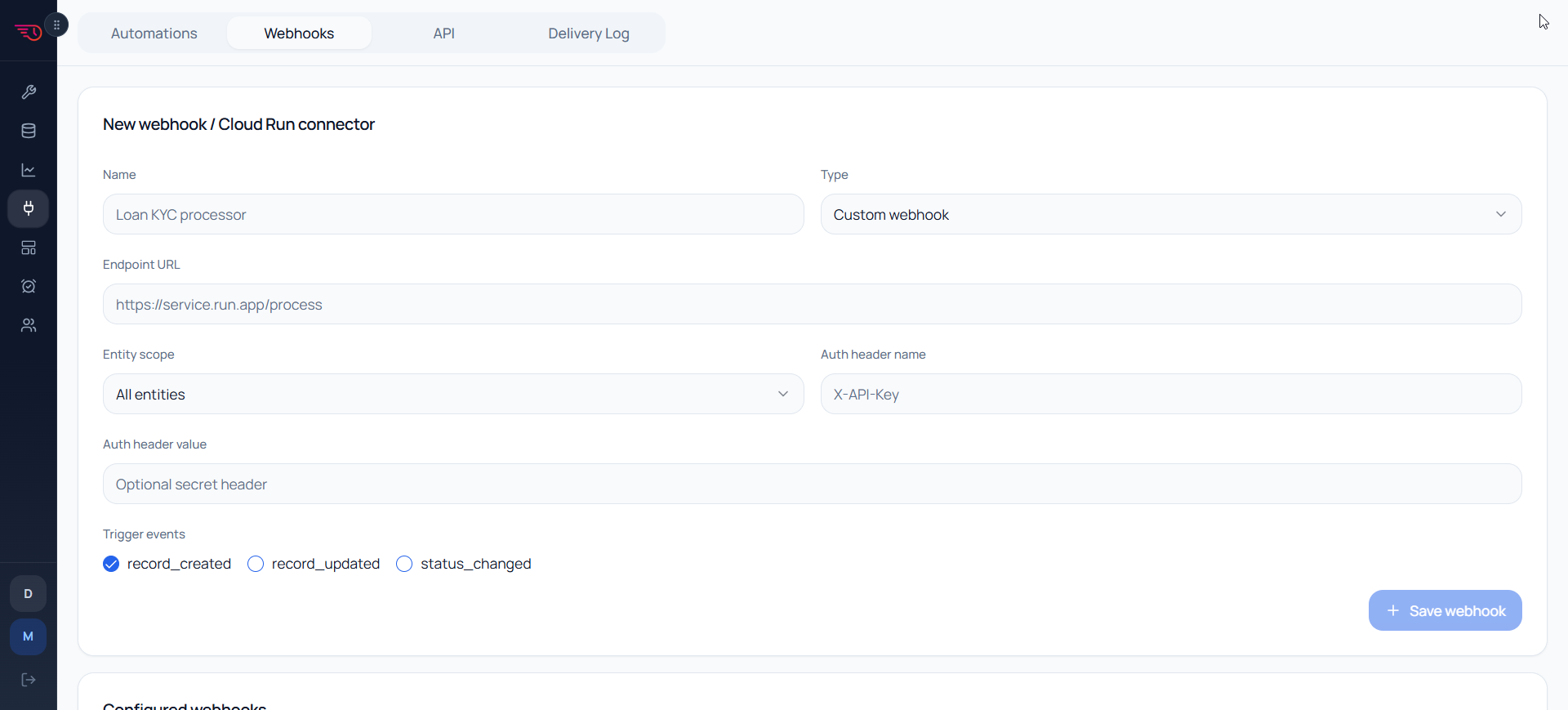
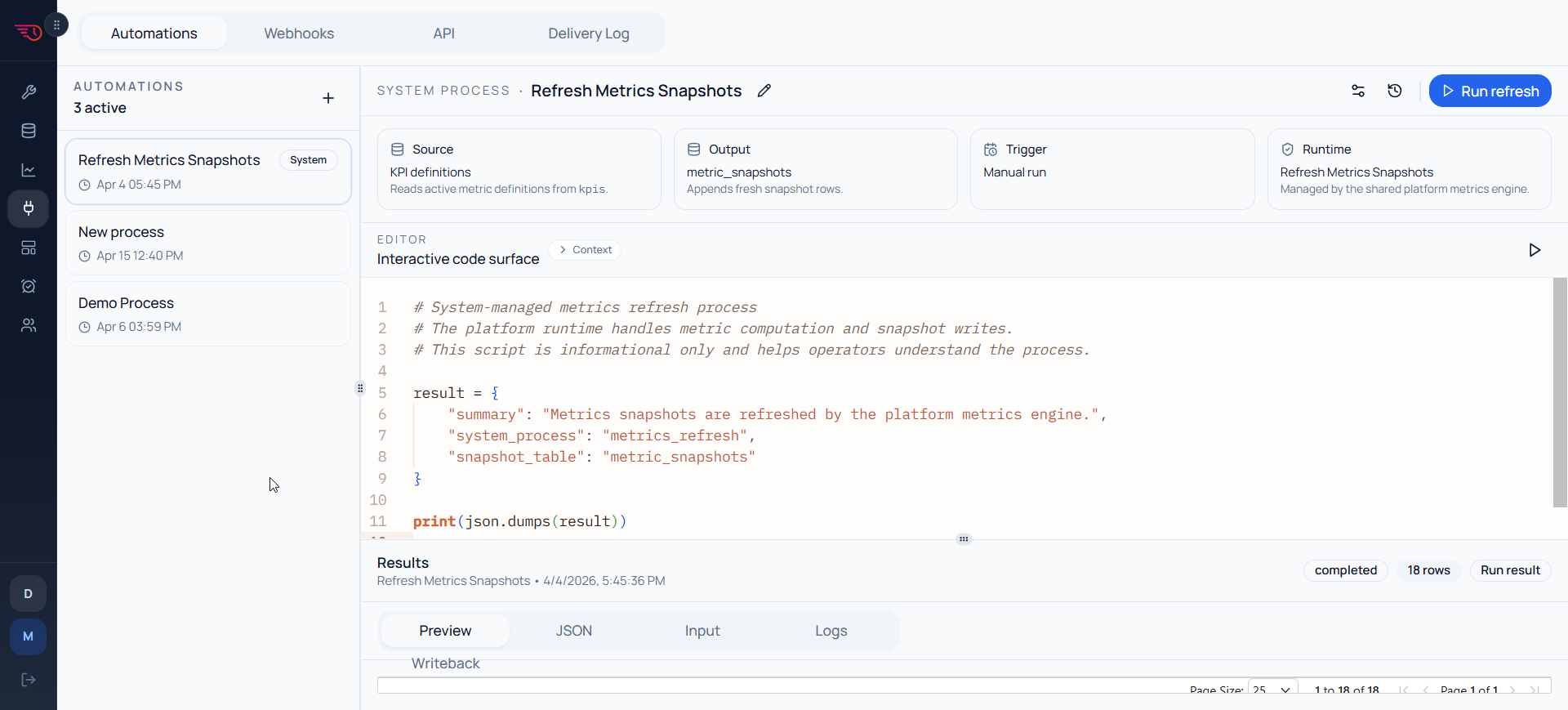
Automations handle the handoffs — order confirmations, status updates, record syncing — without anyone re-typing anything. Your best people spend their time deciding, not compiling.

Automations
05Consequential moves wait for whoever is free enough to make them

Agents prepare the fix and take it — held for your one-tap approval when it matters.

Named Agents draft the customer update, the schedule move, the reorder — and act automatically on routine calls. Consequential moves stay with your team, with the full trail attached.

AgentsGovernance
06There's no baseline, so nobody can tell if it's actually getting better

We baseline every KPI from day one and prove the change every month.

Actual cost, OTIF, downtime — measured from the start, not asserted. A monthly Business Impact Scorecard shows the trend in your own numbers.

Data HubFeeds

How It Works

A loop, not a stack.

We run Operational Intelligence as a continuous loop: collect the signal, watch it as it lands, surface the exception, act — teams course-correct from the insight, agents take governed follow-through — and prove the change. What used to wait for a monthly pack compresses into hours and days. Same shape on every beat.

01

Collect

Data Hub — ERP, MES, QMS, spreadsheets, shared inboxes, and machine feeds into one live typed record.

02

Watch

Watches fire on record change or schedule; named agents own the beat and keep continuous attention.

03

Surface

Analytics shapes KPIs and scorecards from the live record; Feeds deliver briefings, alerts, and reports in plain language — before the morning meeting.

04

Act

Teams get the right briefing or alert in time to course-correct themselves — true augmentation. Named Agents prepare and take governed follow-through — writebacks, work orders, held updates — through Automations and tools, with one-tap approval when judgment matters.

05

Prove

Baselines from day one, plus a monthly Business Impact Scorecard in your own numbers.

Same loop across every distributed beat — see it by department below. Use cases →

What is OI? →

Use Cases

Where long cycles
and distribution break down.

The harder a company is to see as one — departments, sites, geographies, handoffs — the longer the reporting cycle, and the more inefficiencies fall through the cracks. Collating the picture, deciding what matters, and communicating the action back becomes a project of its own. The OI loop does that work largely automatically: same Collect → Watch → Surface → Act → Prove shape on every beat below.

Operations

OTIF risk and stalled jobs surface in the Monday meeting — after the customer promise is already exposed.

  1. CollectOrders, stages, dispatch, and delivery commitments in one live record.
  2. WatchThe Operations Agent keeps a running score on OTIF drift, dwell time, and promise-date risk — no shift goes unchecked.
  3. SurfaceThe order book and at-risk queue are ready before the stand-up starts — not compiled during it.
  4. ActPlanners re-sequence from the queue that morning; the agent drafts the customer update and schedule move, ready for a one-tap sign-off.
  5. ProveOTIF and recovery time, tracked from day one — not estimated after the fact.

The stand-up is a queue of decisions — accurate, current, actionable.Ops lead · planners · account owners

Operations

OTIF risk and stalled jobs surface in the Monday meeting — after the customer promise is already exposed.

  1. CollectOrders, stages, dispatch, and delivery commitments in one live record.
  2. WatchThe Operations Agent keeps a running score on OTIF drift, dwell time, and promise-date risk — no shift goes unchecked.
  3. SurfaceThe order book and at-risk queue are ready before the stand-up starts — not compiled during it.
  4. ActPlanners re-sequence from the queue that morning; the agent drafts the customer update and schedule move, ready for a one-tap sign-off.
  5. ProveOTIF and recovery time, tracked from day one — not estimated after the fact.

The stand-up is a queue of decisions — accurate, current, actionable.Ops lead · planners · account owners

Our Approach

Complete OI.
Managed for you, every day.

Not a platform to configure. Not a dashboard to check. A managed service that goes live in weeks and runs automatically — delivering the briefings, alerts, and reports your operation depends on, with us handling everything underneath.

Weeks 1–6

We set it up.

  • Connect your ERP, spreadsheets, and shop-floor data into one live workspace
  • Configure agents, watches, and automations for your operation type
  • Deliver your first automated briefing within 48 hours of go-live
  • Establish the baseline every future impact measurement is measured against
Every month

This arrives without asking.

  • Daily production briefing before the morning meeting
  • Weekly quoted-vs-actual margin report
  • At-risk order and equipment downtime alerts, in real time
  • Customer updates drafted and held for your one-tap approval
  • Monthly Business Impact Scorecard — hours saved, margin trend, downtime
  • Agent tuning as your operation grows and changes
Always

What you never manage.

  • No data team to hire, train, or manage
  • No dashboard to build, maintain, or remember to check
  • No report to compile, format, or send
  • No templates to update when data changes
  • No engineering work after go-live

Insights

Platform depth
behind the loop.

Use cases show Collect → Watch → Surface → Act → Prove by department. These short reads go deeper on the capabilities that make that compressed cycle real — one live record, handoffs that run themselves, agents and teams that act, metrics that prove it.

Your team stops chasing data.
They start leading the business.

Meet the agents →